Customer support management
Written By Stanislas
Last updated 6 months ago
Overview
Swiftask offers two main ways to get help: getting help from Suzanne (the AI support agent) to open a ticket, and accessing the documentation library. You can also join the community for peer support and feedback. Each option serves a different need, so you can choose the best way to get help. Support is included in all Swiftask subscription plans, with features and response times varying by your plan level.
When to use "Need help"
Use "Need help" when you encounter a technical issue, want to report a bug, or need guidance on workspace configuration through our documentation. The support team and community are here to help you get the most out of Swiftask.
What you'll learn:
How to access the support menu from your workspace
How to chat with Suzanne, the AI support agent
How to open a ticket
How to join the community for peer support
Where to find self-service documentation
Prerequisites
To access support features, you need:
An active Swiftask workspace account
Access to your workspace settings (Owner, Admin, or Member role)
For ticket submission: valid contact information (email and phone number)
For community access: a Featurebase account (optional, but recommended)
Support by plan
Support is included in all Swiftask plans. Here's what you get with each subscription level:
Team Starter
Standard email support via the ticket system
Access to Suzanne AI support agent for documentation-based questions
Access to the Swiftask Help Center
Community feedback page on Featurebase
Typical response time: 24–48 hours
Team Growth
Priority support with faster response times
Mini video calls available if needed and requested by the Swiftask support team (~5minutes)
Access to Suzanne AI support agent
Access to the Swiftask Help Center
Community feedback page on Featurebase
Dedicated support channel
All Plans
Suzanne AI agent: Answers questions based on documentation and provides level 1 support
Escalation to human support: If you're not satisfied with the AI response, she will open a ticket for the support team to handle
Public feedback community on Featurebase
Tutorials on Youtube
Step-by-step guide
1. Access the support menu
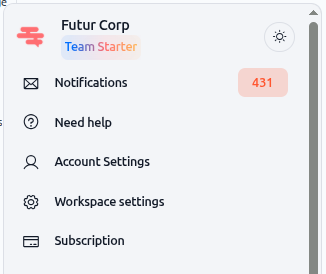
In your Swiftask workspace, locate the settings icon (gear icon) in the bottom-left corner of the sidebar
Click the settings icon to open the workspace menu
Select "Need help" from the menu options
As shown below, the workspace settings menu displays several options including "Need help".
2. Choose your support option
When you click "Need help," a modal window appears with three support options. Select the one that best fits your need.
3. Open a support ticket/ Get help from Suzanne (AI support agent)
When to use this option: You've found a bug, need technical help, clarification about a feature, or want to open a ticket.
Suzanne is an AI support agent that answers your questions based on Swiftask documentation. She provides level 1 support and can help with most common questions.
How to get help from Suzanne:
Describe the issue to Suzanne (you can type or dictate, and add a screenshot if relevant)
Suzanne reads your question and searches the documentation for relevant answers
She provides a response based on available documentation
If you're not satisfied with the answer, she will open a support ticket
When to escalate to human support:
If Suzanne's answer doesn't help you solve your problem, she will open a support ticket and the human support team will take over. Your ticket will be handled by email (Team Starter) or with priority support and video calls if needed (Team Growth).
Expected result: Your ticket is submitted to the support team. You'll receive a confirmation email, and the team will respond based on your subscription plan's support level. Team Growth customers receive priority support and faster response times.
4. Join the community on Featurebase
When to use this option: You want to connect with other Swiftask users, share feedback, or get help from the community.
Steps:
Click "Join our Community" from the support menu
You'll be redirected to the Swiftask community
Browse existing feedback and feature requests
Post your own feedback or question
Engage with other users and the Swiftask team
Expected result: You connect with other Swiftask users, see how others are using the platform, and contribute to shaping future features through public feedback.
5. Browse the documentation
When to use this option: You want to learn how to use a feature, find tutorials, or search for answers to common questions.
Steps:
Click "Browse Documentation" from the support menu
You'll be redirected to the Swiftask Help Center
Use the search bar to find articles related to your question
Browse by category (Getting Started, Agents, Projects, Workspace Administration, etc.)
Read the guides and follow the step-by-step instructions
Expected result: You find self-service answers and learn how to use Swiftask features independently.
Practical use cases
Case 1: Quick question about a feature
You're unsure how to configure an agent. Instead of opening a ticket, you ask Suzanne the question. She searches the documentation and provides an answer with a link to the relevant guide. You follow the instructions and solve the problem in minutes.
Case 2: Community discussion and feedback
You have an idea for a new feature. You post it on the Featurebase community feedback page where other users can vote on it and comment. The Swiftask team monitors this feedback and uses it to prioritize future development.
Tips & best practices
For faster responses:
Use clear subject lines: Instead of "Help," use "Agent not responding to emails" so the team knows what to expect.
Include your workspace name: This helps the support team locate your account quickly.
Be available: Provide a phone number or email where the team can reach you if they need more information.
For Team Growth customers: Request a video call if the issue requires real-time discussion.
Additional resources
Swiftask Help Center – Browse all guides and tutorials for every feature at the help documentation portal
Featurebase community – Join for peer support, feedback, and community discussions on the community platform
Workspace administration – Learn how to manage your workspace, members, and subscription in the admin guide
Using agents from chat – Learn how to use Suzanne and other agents from the chat interface