Preferences & tools
Written By Stanislas
Last updated 16 days ago
Overview
The Preferences & tools section centralizes your personal memory configurations, external communication integrations, and developer credentials in Swiftask. You can review and manage long-term user memory, connect your personal email accounts via IMAP/SMTP, and generate personal API keys.
Configuring these tools enriches your AI interactions with persistent context, allows assistants to act on your behalf using your own email credentials, and provides secure programmatic access to Swiftask.
Prerequisites
Before configuring preferences and tools, ensure you have:
An active Swiftask account
IMAP and SMTP server details and credentials (for email integration)
An understanding of API key security principles (for developer keys)
Step-by-step guide
1. Access preferences & tools
Click the settings icon in the bottom-left corner of the sidebar and select Account settings.
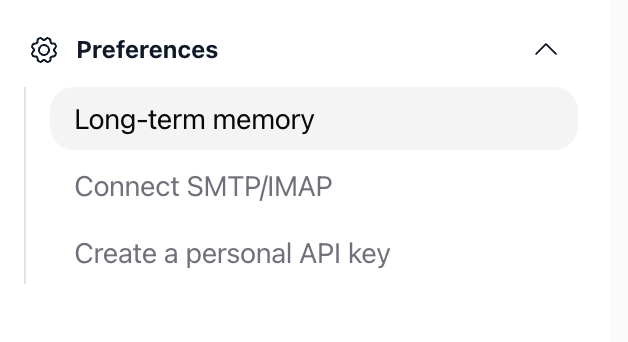
In the left navigation menu, expand the Preferences section.
Access Long-term memory, Connect SMTP/IMAP, or Create a personal API key.
2. Manage long-term memory
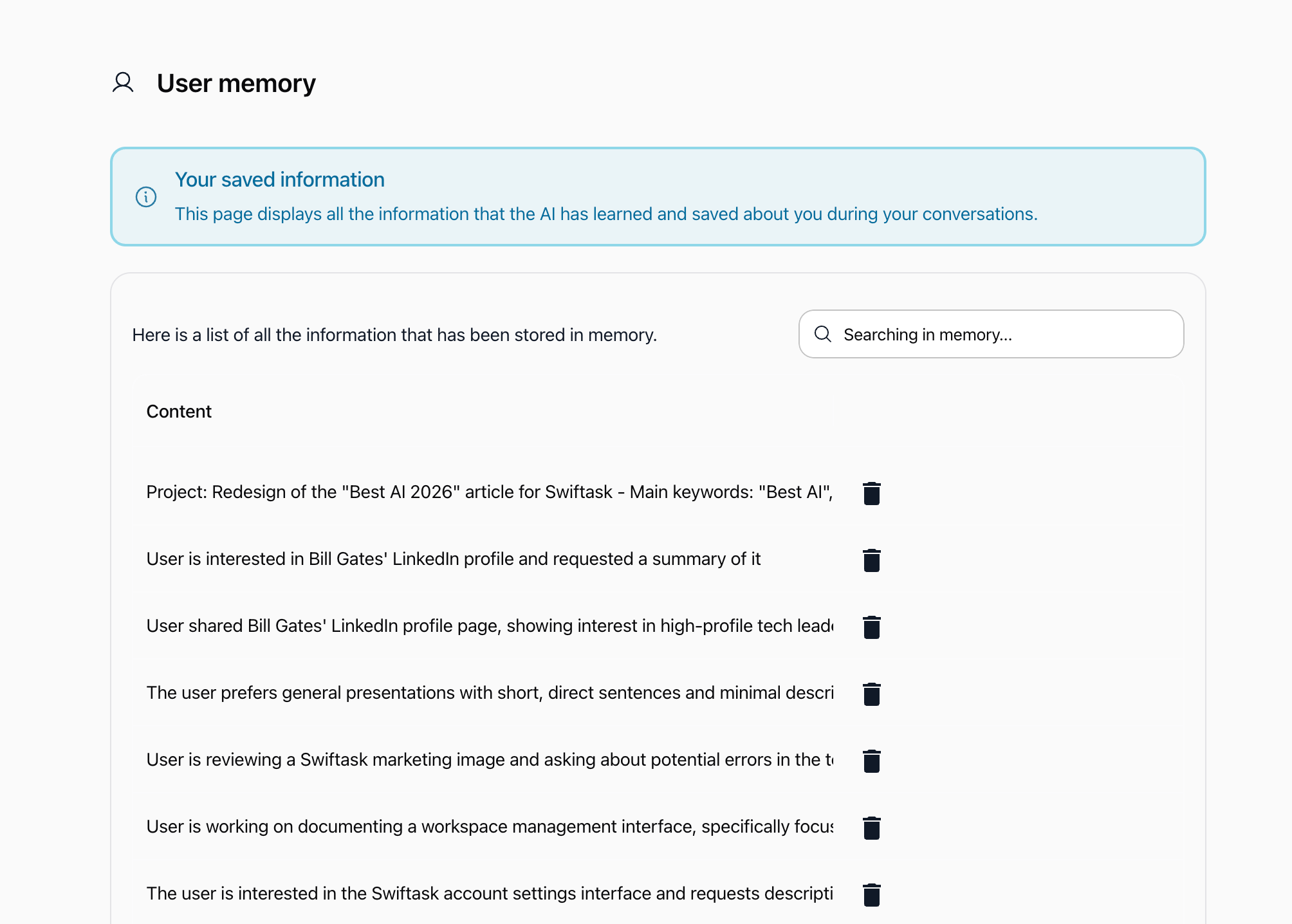
Click Long-term memory under Preferences.
Review the Your saved information banner explaining how AI learns and retains personal context across conversations.
Inspect the stored memory list under Content.
Use the search bar Searching in memory… to find specific memories.
Click the delete icon (trash can) next to any memory entry to remove outdated information from the AI's memory.
3. Connect SMTP/IMAP email accounts
Click Connect SMTP/IMAP under Preferences.
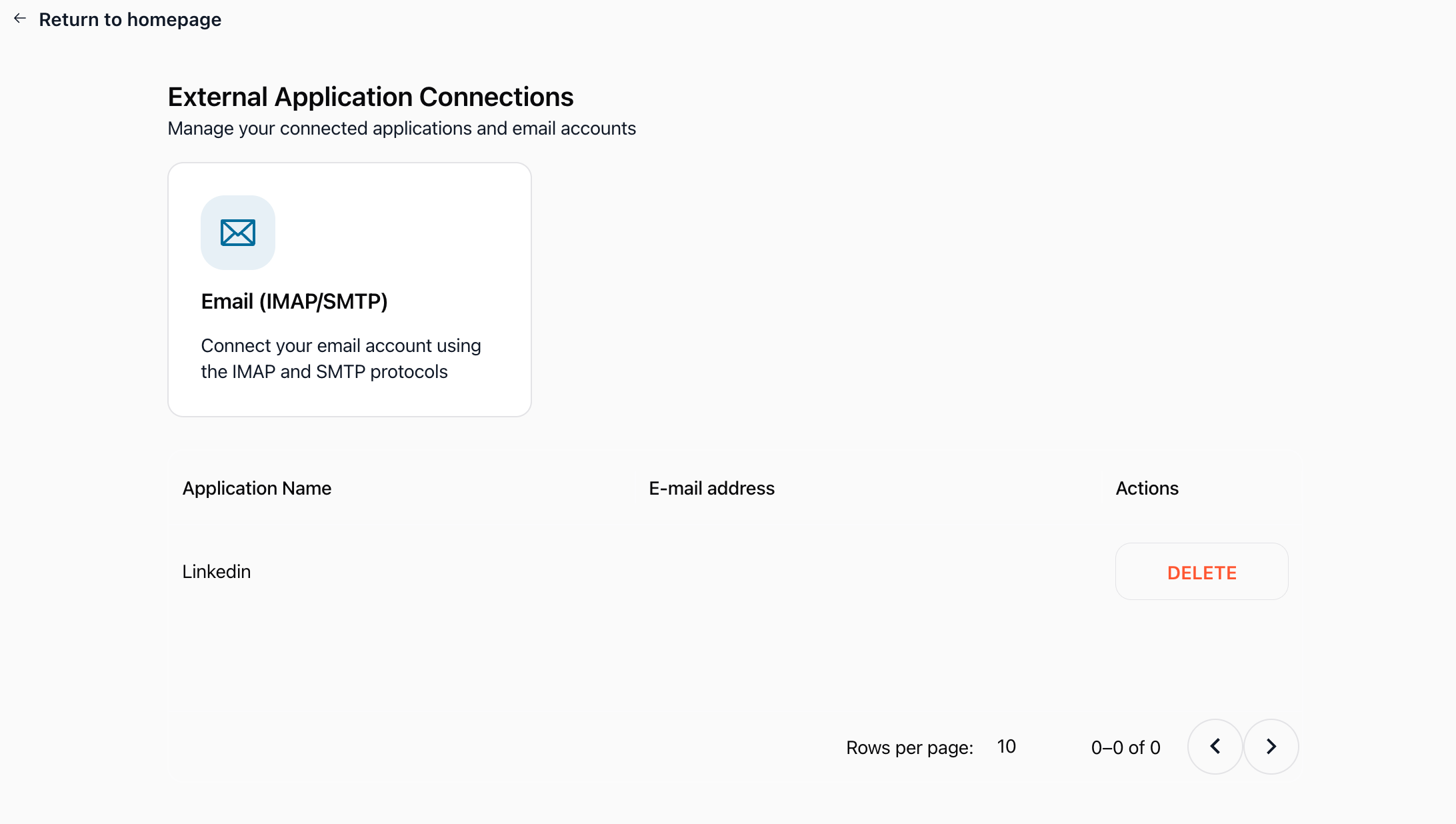
On the External Application Connections page, click the Email (IMAP/SMTP) card.
Enter your email provider credentials, incoming IMAP settings, and outgoing SMTP host details.
Verify the connection to link your email account.
Connected services will appear in the table below where you can manage or delete them at any time.
4. Create a personal API key
Click Create a personal API key under Preferences.
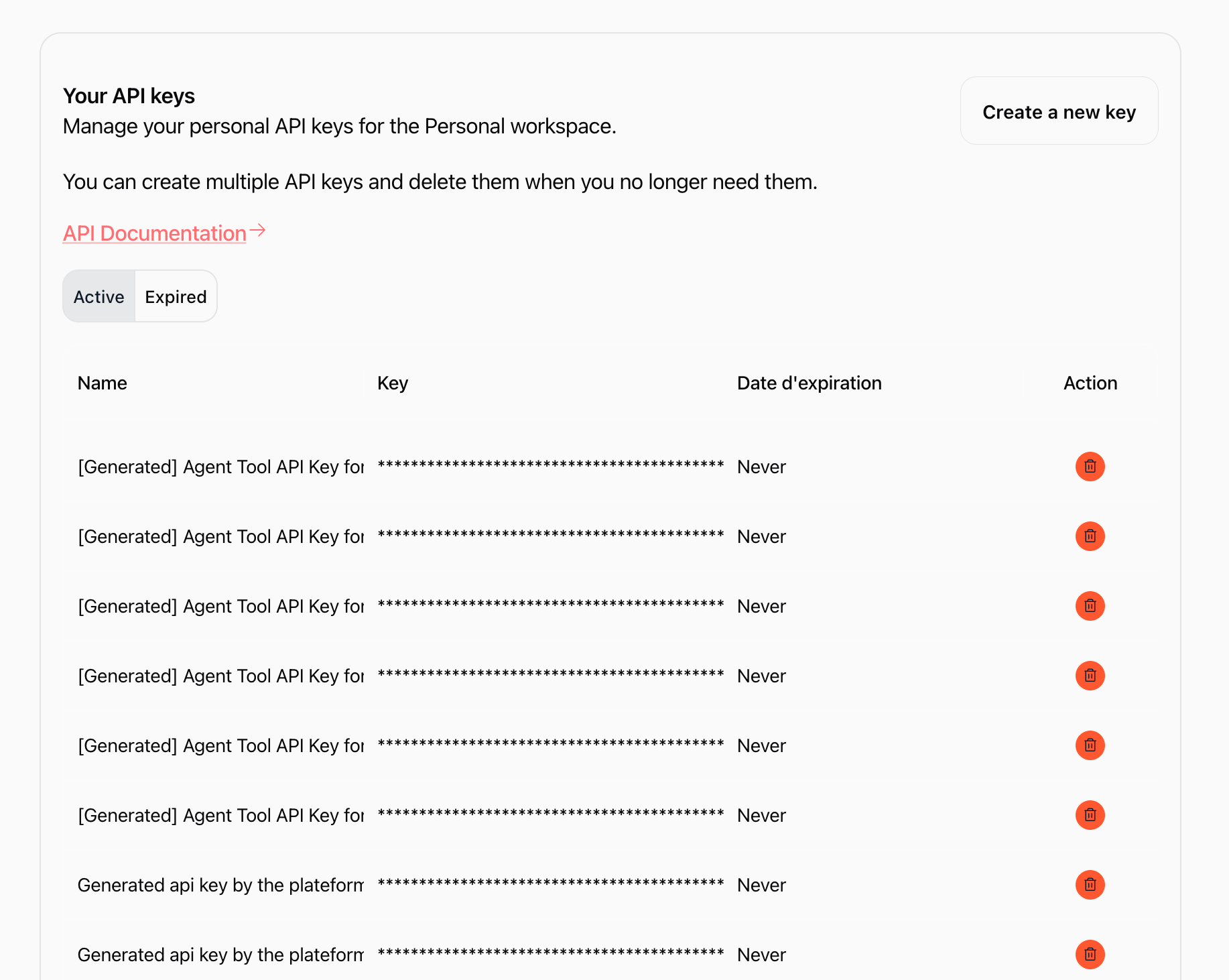
On the Your API keys page, review your active and expired keys.
Click the Create a new key button in the upper-right corner.
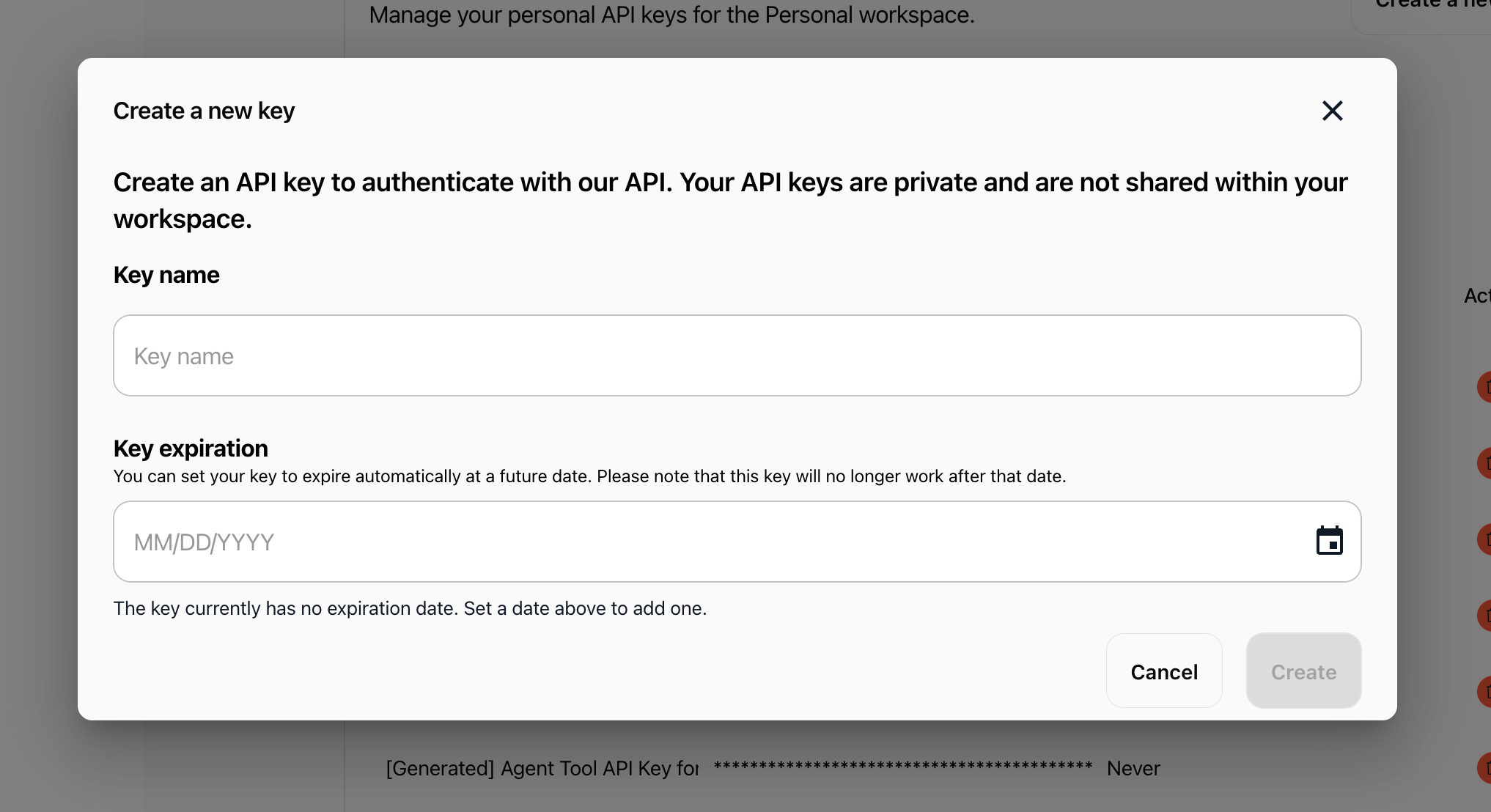
In the Create a new key modal:
Enter a descriptive Key name (e.g., "Personal Automation Script").
Optionally set a Key expiration date using the calendar picker, or leave blank for no expiration.
Click Create.
Copy your newly generated API key immediately and store it securely, as it will not be displayed again.
Practical use cases
Persistent project preferences: An engineer relies on long-term memory so their assistant continuously remembers their coding framework preferences and architectural patterns without repeated instructions.
Direct email sending via agent: A sales representative connects their corporate email via IMAP/SMTP so a sales agent can prepare and send personalized emails directly from their inbox.
Local automation scripts: A data analyst generates a personal API key to run Python scripts that query Swiftask agents for document summarization.
Tips & best practices
Never share your personal API keys or commit them to public version control repositories.
Use application-specific passwords rather than your primary mail password when connecting accounts like Gmail or Microsoft 365 via SMTP/IMAP.
Periodically review stored long-term memories and delete obsolete project details to ensure agent responses remain accurate.
Troubleshooting
Issue: SMTP/IMAP connection fails
Cause: Incorrect server host, invalid port, incorrect encryption method, or two-step verification blocking standard logins.
Fix: Check your email provider's IMAP/SMTP documentation for correct port numbers (typically 993 for IMAP SSL, 587 or 465 for SMTP) and generate an app password.
Issue: Personal API key is lost or compromised
Cause: API key secret tokens are only visible upon creation.
Fix: Click the red trash icon next to the affected key in Your API keys to immediately delete it, then generate a new key.
Additional resources
My account
Credits & billing
Developer documentation
Was this helpful?
Still need help? Ask the team