Sharing a conversation
Written By Stanislas
Last updated 16 days ago
Overview
Sharing a conversation allows you to share full AI chat sessions with teammates or external collaborators in Swiftask.
Instead of copying prompts and responses manually, you can share the entire context of a conversation. You can grant internal workspace members specific access levels or generate a public link for external view-only access.
Prerequisites
An active Swiftask account.
At least one active conversation in Chat.
Workspace membership for teammates you plan to invite directly.
Step-by-step guide
1. Open the conversation sharing dialog
Open the conversation you want to share from your chat history or left sidebar.
Click the Share button located in the top-right header of the conversation window.
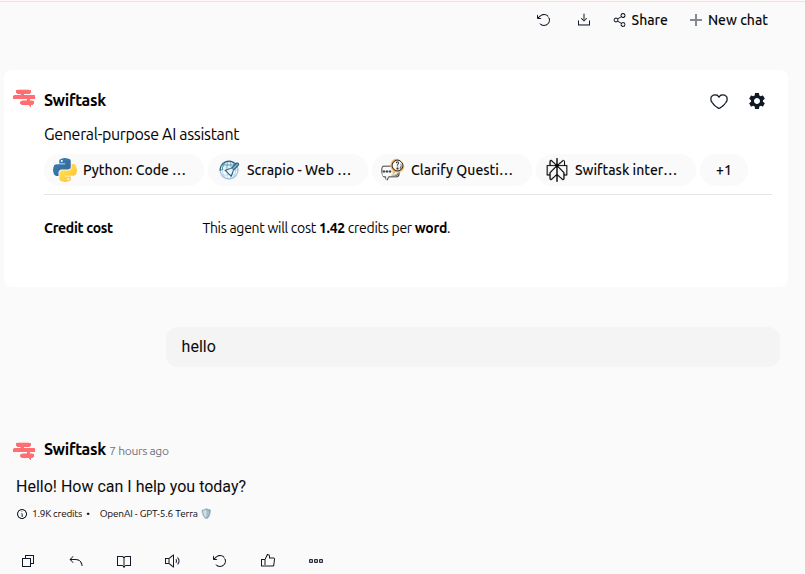
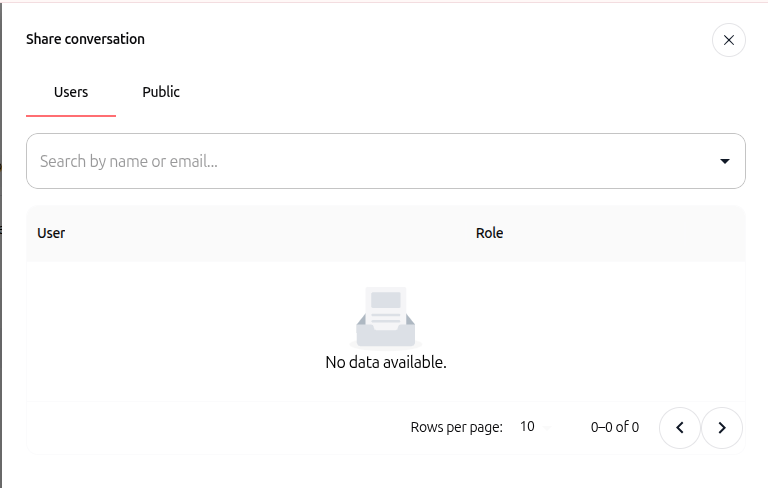
The Share conversation modal opens, displaying two tabs: Users and Public.
2. Share directly with workspace teammates
In the Share conversation modal, select the Users tab.
In the Search by name or email… field, search for and select your teammate.
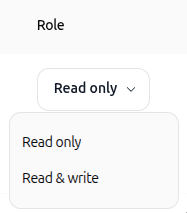
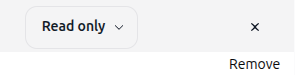
Under the Role dropdown next to the user, choose their access level:
Read only: The user can view the entire conversation history and attachments, but cannot send new messages or edit content.
Read & write: The user can view the chat, send new messages, and edit their own contributions.
Once shared, the teammate's avatar icon appears directly in the conversation header next to the Share button, showing who has access.

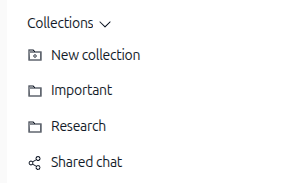
The invited teammate can find and open the conversation from the left sidebar under Collections → Shared chat.
3. Update roles or revoke user access
Open the conversation and click Share in the header.
In the Users tab, locate the user whose access you want to modify.
To change permissions, click their Role dropdown and select the new role.
To remove the user completely, click the × (Remove) icon next to their role.
4. Share via a public link
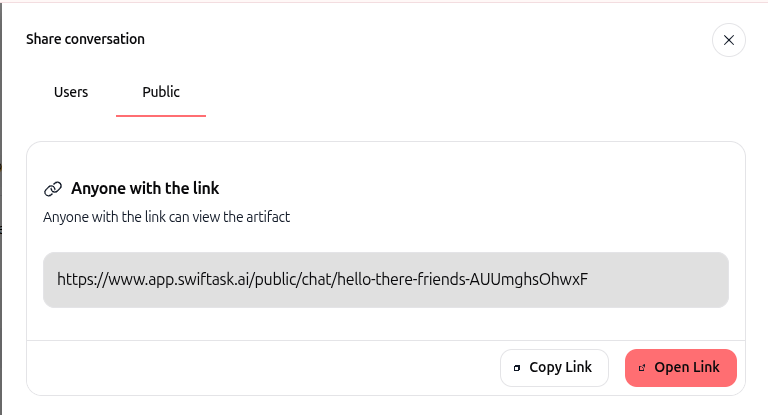
In the Share conversation modal, switch to the Public tab.
View the generated public link (
https://www.app.swiftask.ai/public/chat/[slug]). Anyone with this link can view the conversation in read-only mode without logging in.Click Copy Link to copy the URL to your clipboard, or click Open Link to preview the shared view in a new browser tab.
Practical use cases
Internal review: Share an analysis or draft with team members using Read only mode to collect feedback without altering the existing chat history.
Collaborative brainstorming: Invite colleagues with Read & write permissions so multiple members can prompt the AI and iterate together in the same thread.
External deliverables: Generate a public link to share conversation findings or reports with external clients without requiring them to create an account.
Tips & best practices
Apply least privilege: Assign the Read only role by default, reserving Read & write for active collaborators who need to submit prompts.
Preview before sending: Click Open Link in the Public tab to review how external viewers will see your shared conversation.
Quickly check collaborators: Glance at the conversation header to see avatar badges for all teammates who have access to the conversation.
Troubleshooting
A teammate cannot see the conversation:
Cause: The user was invited with a different email address or their interface has not refreshed.
Fix: Verify the email address in the Users tab and ask the teammate to refresh their sidebar to display the conversation under Collections → Shared chat.
A collaborator cannot send messages:
Cause: The user's role is set to Read only.
Fix: Reopen the Share modal, navigate to the Users tab, and switch their role to Read & write.
An external viewer cannot open the public link:
Cause: The link was copied incompletely.
Fix: Reopen the Public tab in the Share modal and click Copy Link to copy the full URL again.
Additional resources
Search and manage history – Organize, search, and revisit previous conversations.
Basic features – Discover key everyday features and tools available across Chat.
Roles and authorizations – Learn how workspace roles and permissions govern collaboration.
Was this helpful?
Still need help? Ask the team