Prompt library
Written By Stanislas
Last updated 16 days ago
Overview
The prompt library is a centralized system for creating, storing, and organizing reusable prompt templates directly within Chat. Instead of rewriting standard instructions or searching past messages, you can store structured instructions and insert them into your conversation in one click.
Templates support dynamic variables indicated by the # symbol. When you run a prompt with variables, Swiftask prompts you to fill in the missing context, ensuring consistent results while adapting to specific tasks.
Prerequisites
An active Swiftask account with access to the Chat interface.
No special permissions or plans are required; the prompt library is available to all users.
Step-by-step guide
1. Access the prompt library from Chat
Navigate to Chat in Swiftask.
Above the message input box, click Browse prompts next to the AI model selector.
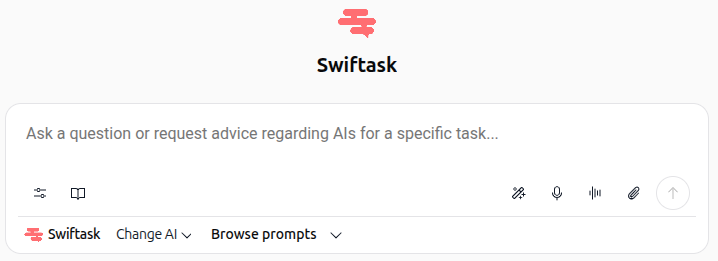
The Prompt Library window opens, displaying your navigation sidebar, existing templates, and the search bar.
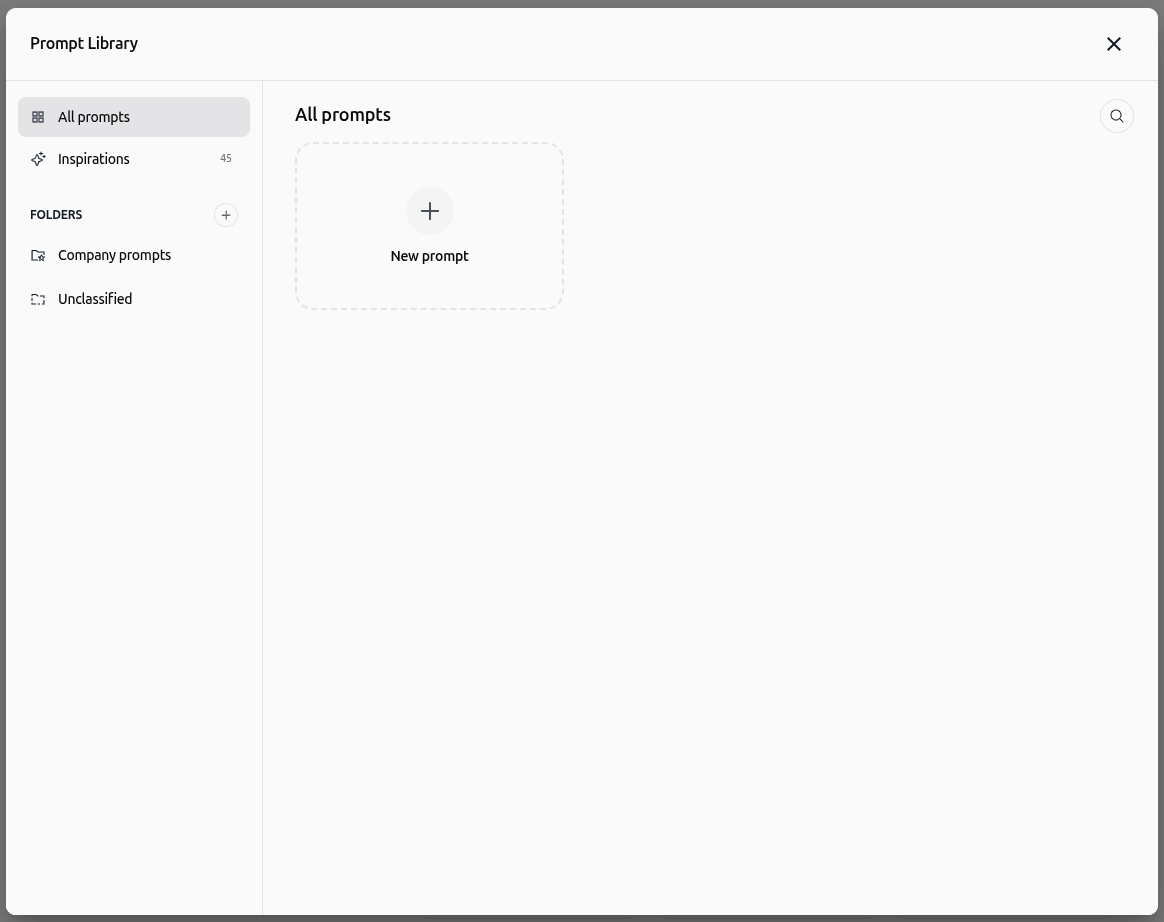
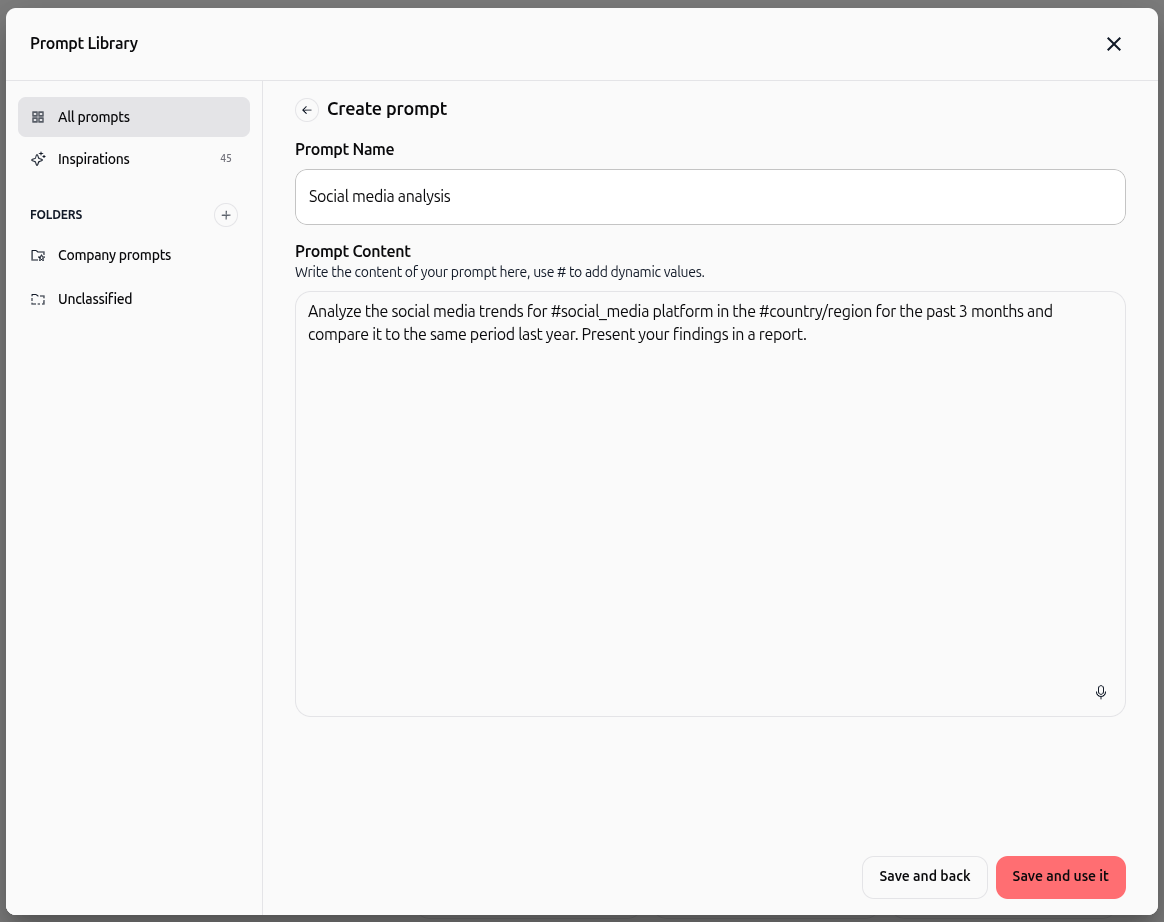
2. Create a custom prompt template with dynamic variables
In the Prompt Library window, click the + New prompt card.
In the Prompt Name field, enter a descriptive title for your template.
In the Prompt Content field, enter your instructions.
Insert dynamic variables by typing
#immediately followed by a label name (such as#social_mediaor#country).Choose your saving action:
Click Save and back to save the template and return to the library view.
Click Save and use it to save the template and insert it immediately into your active chat.
3. Fill context fields and launch a prompt
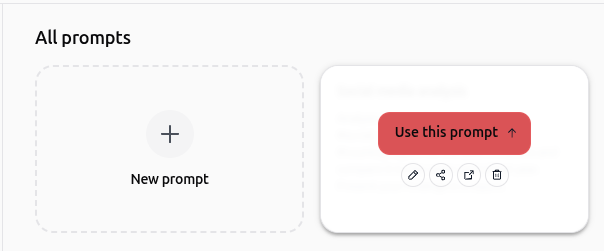
In the prompt library, hover over the prompt card and click Use this prompt ↑.
If the template contains
#variables, the Fill prompt context section appears.Type the appropriate values into each variable input field.
Click Use Prompt.
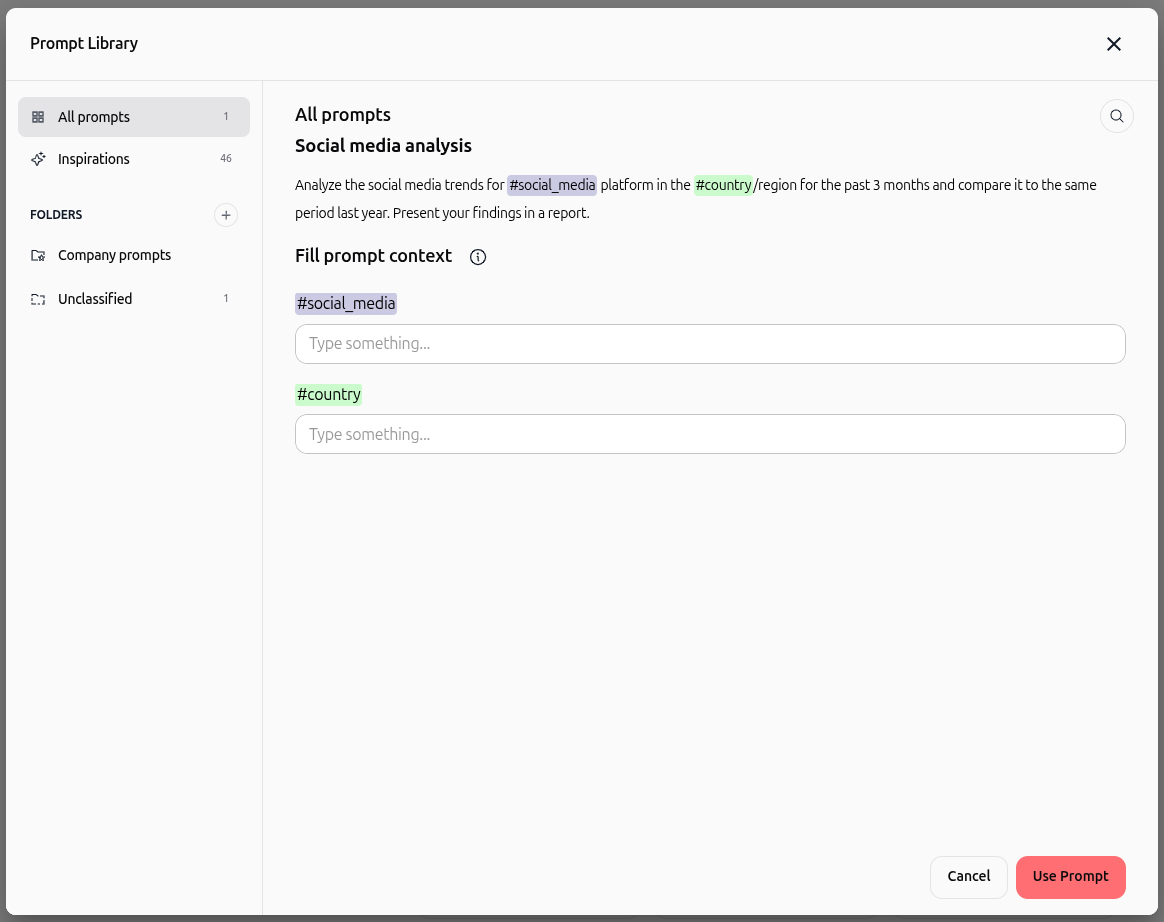
Swiftask replaces the variables with your entries and places the complete instruction directly into your Chat input box.
4. Browse and use inspiration templates
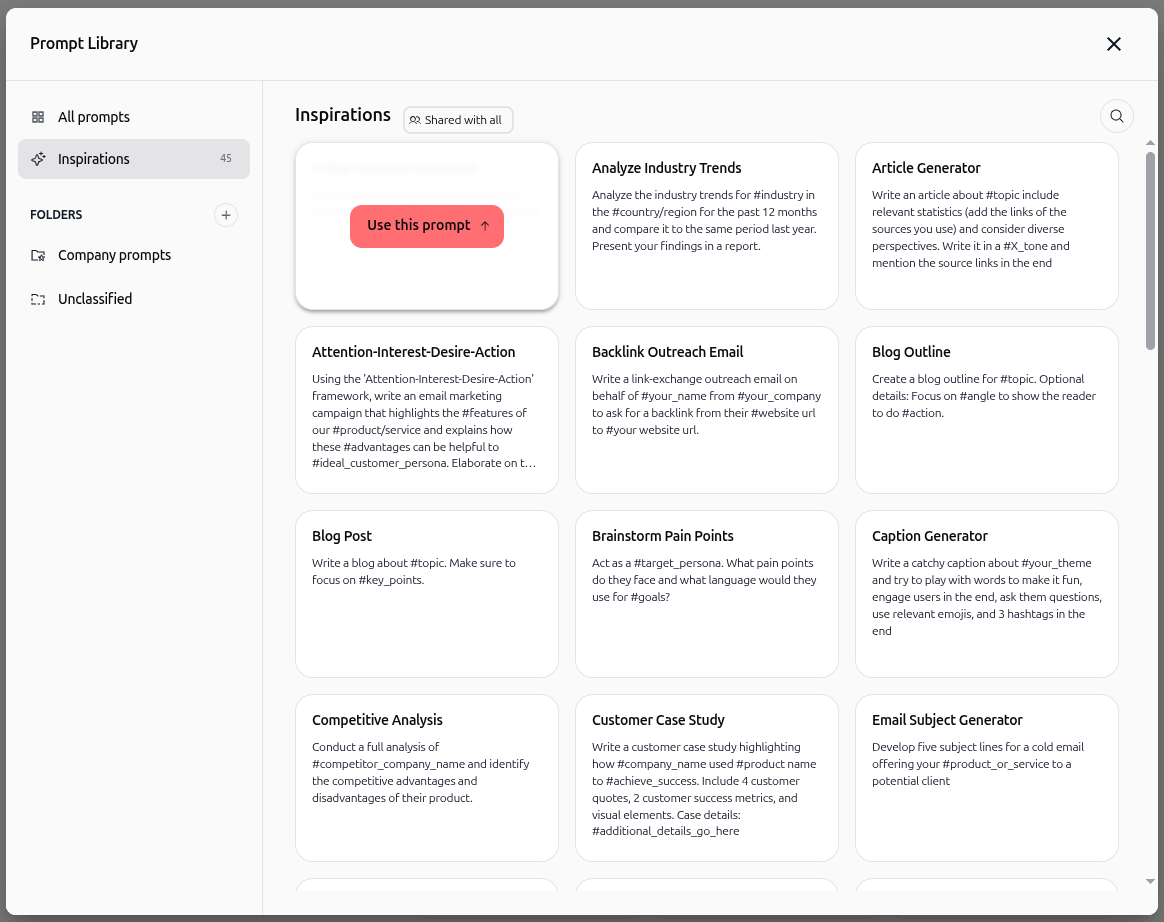
In the left sidebar of the library modal, click Inspirations.
Browse through pre-configured templates curated for common marketing, sales, content, and analysis workflows.
Hover over any inspiration template card and click Use this prompt ↑ to populate context fields or apply it to your chat.
5. Organize prompts into folders
In the left sidebar under FOLDERS, click the + button.
Enter a folder name and confirm to create it.
Prompts without a designated folder are kept in Unclassified.
To move a prompt into a folder, hover over the card, click the Move icon, and select the destination folder.
6. Manage and share prompt templates
Hover over any custom prompt card to reveal quick management actions:
Edit (pencil icon): Update the prompt name, instructions, or dynamic variables.
Share (share icon): Share the template with specific teammates or user groups. Assign appropriate access roles:
User: Can view and run the prompt in chat.
Admin: Can edit prompt details, manage permissions, and assign members.
Owner: Full control over the template, including permanent deletion.
Move (folder icon): Transfer the prompt to another folder.
Delete (trash bin icon): Permanently remove the prompt from your library.
Practical use cases
Social media market analysis
Create a template such as: Analyze social media performance for #social_media in #country for the past 3 months. Compare findings with the previous quarter.
Fill in the platform and region when running the prompt to receive standardized audit reports.
Standardized customer inquiries
Draft a reusable reply template: Generate a polite customer support response addressing #issue, offering #workaround, and confirming follow-up by #timeline.
Ensure team-wide messaging stays polite, precise, and consistent.
Blog content generation
Build an outline template: Create a detailed blog outline on #topic targeting #audience, with a #tone tone and 5 key sections.
Accelerate content drafts while tailoring angles to specific personas.
Tips & best practices
Use explicit variable names: Choose clear names like
#product_nameor#target_audiencerather than#var1to make context forms intuitive.Avoid spaces in tags: Dynamic variables must not contain spaces (use
#job_titleinstead of#job title).Group by department or project: Create dedicated folders for sales, marketing, and development to maintain an organized library.
Review inspiration templates: Use the Inspirations tab to discover proven prompt structures before building complex templates from scratch.
Troubleshooting
Dynamic variable fields do not appear
Cause: The
#character was separated from the variable name by a space, or special punctuation broke the tag.Fix: Edit the template and ensure variable names directly follow the hash mark (e.g.,
#company_name).
Prompt is missing from the custom list
Cause: The prompt was created inside a specific folder or remains in Unclassified.
Fix: Check All prompts or use the search icon in the top right to search for the template by title.
Additional resources
Get started in Chat
Chat – Attaching files & documents
AI recommendation from chat
Was this helpful?
Still need help? Ask the team